If you want a Hermes Agent OS free of charge, the answer is Herald OS, a free, open-source (MIT) Hermes Agent OS that puts a full desktop interface on top of Hermes Agent.
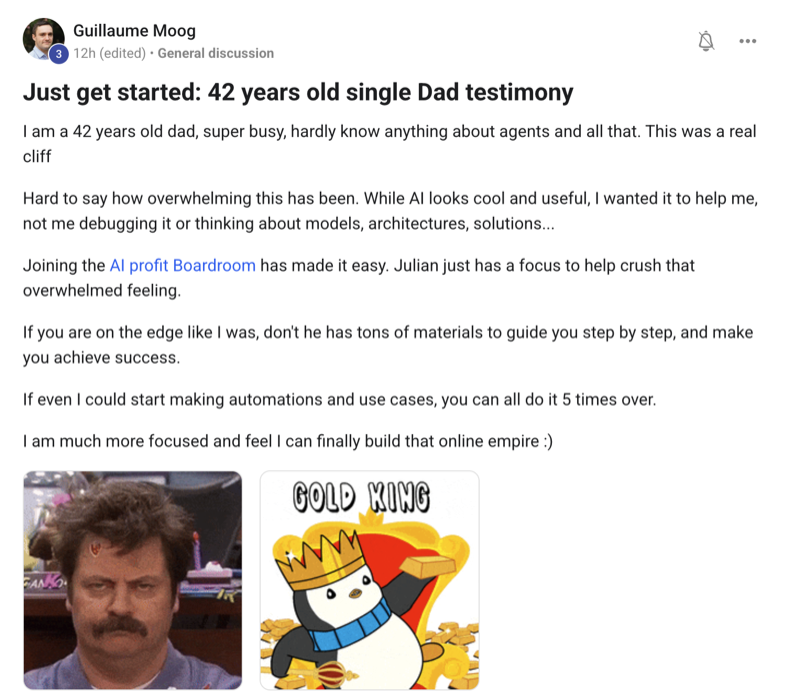
I set it up on my Mac with Claude doing the install in about two minutes, and I want to show you exactly how to run it for $0.
The software is free, but the brain behind it can cost money if you pick the wrong model.
First, you'll install Herald OS and Hermes Agent step by step.
Second, you'll pick a free model so the whole stack costs you nothing to run.
I'll also tell you what didn't work for me, because Herald OS is still in alpha.
What Is The Free Hermes Agent OS?
Herald OS is an agent-native operating system with Hermes Agent as the interface.
Instead of clicking through menus and folders yourself, you talk or type to Hermes, and it works across the machine for you.
It was built by an independent developer called Luke The Dev, and the project says plainly that it is not affiliated with Nous Research.
Nous Research makes Hermes Agent itself, and Herald OS runs a normal Hermes install underneath without forking it.
The code is on GitHub at iamlukethedev/Herald-OS under the MIT licence, which means you can use it, change it and share it for free.
The current status is alpha, version 0.1, so you should expect some rough edges.
If you want the full feature tour before you install, my Herald OS explainer goes through every screen.
This post stays focused on one job, which is getting a Hermes Agent OS free and running on your machine.
Why I Wanted A Hermes Agent OS In The First Place
When I first used Hermes Agent around March and April this year, everything happened in the terminal.
It worked, but it was messy, and most people I coach don't want to live in a terminal window.
Herald OS turns Hermes into the whole desktop, with a dashboard, spaces, missions, memory, files, automations and settings.
Honestly, I think it looks nicer than Hermes Desktop, and that's coming from someone who uses Hermes every single day.
What's Actually Free In A Hermes Agent OS (And What Isn't)
This is the bit most people get wrong, so I'll lay it out clearly.
| Part of the stack | Cost | What to watch |
|---|---|---|
| Herald OS | Free, MIT licence | It's alpha software, so keep backups. |
| Hermes Agent | Free and open source | You install it once with the official install script. |
| The model provider | Free or paid, depending on your pick | This is the only part that can bill you. |
| Free voice engine | Free | It uses on-device transcription and free Edge voices, or the Nous subscription if your plan includes it. |
| Live voice engine | Paid and opt-in | The docs list it at $0.05 per minute through an OpenAI key. |
| Hardware | Your own machine | Local models need enough memory to run well. |
So the honest answer is that a Hermes Agent OS can be completely free, as long as you choose a free brain.
The Herald OS README says it directly: Hermes needs a model provider, either a Nous Portal account or an API key from a provider like OpenRouter, OpenAI, Anthropic or a local model.
🔥 Want the Hermes setups I actually run every day? Inside the AI Profit Boardroom, I've got step-by-step Hermes Agent training, including free-model setups and my full Agent OS. You'll be learning alongside 3,400+ members with four coaching calls a week. → Get access here
How To Set Up A Hermes Agent OS Free On A Mac (Step By Step)
The Mac route is the quickest way to try Herald OS, and it's the one I used.
You need macOS 13 Ventura or later on Apple Silicon.
Step 1: Install Hermes Agent
Hermes Agent goes in first, because Herald OS uses your own Hermes install.
Run the official install script, reload your shell, then run the setup wizard.
curl -fsSL https://hermes-agent.nousresearch.com/install.sh | bash
source ~/.zshrc
hermes setup
The setup wizard walks you through choosing a model provider and signing in.
This is where you make the free choice, and I'll show you the free options in the next section.
You can change the model later with hermes model or from the Herald OS settings.
Before you go further, check that Hermes works on its own by running hermes doctor and saying hello to hermes in the terminal.
Step 2: Download Herald OS
Go to the Herald OS releases page and download the Mac DMG for Apple Silicon.
Open it and drag Herald OS into your Applications folder.
Step 3: Let macOS open it
The build isn't notarised by Apple yet, so macOS blocks it the first time.
The README gives you one command to clear that, and then you open the app normally.
xattr -dr com.apple.quarantine "/Applications/Herald OS.app"
Step 4: First launch
Herald OS takes over the whole screen when it starts.
Press Cmd+Ctrl+F to leave or re-enter fullscreen, and press Cmd+Q to quit.
On the first start it adds its system tools to Hermes as a plugin called herald-os-bridge.
macOS will ask for Screen Recording, Accessibility or Microphone access the first time a feature needs it.
If Hermes needs a model and you haven't set one, Herald OS shows a sign-in card for you.
Step 5: Test that it all works
Open the Hermes page and ask it something simple.
Then ask what is using the most memory on your machine right now, and it should answer with its own system tool instead of a shell command.
Ask it to move a file and you should see an approval card before anything happens.
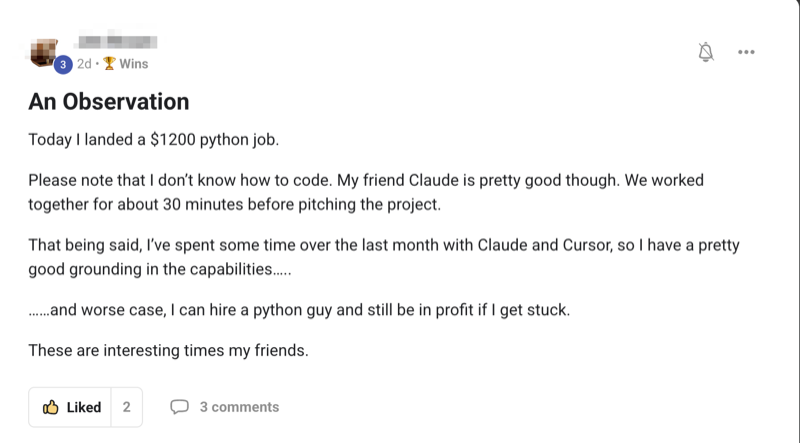
If you get stuck on any step, you can do what I did and ask Claude to run the install for you.
That took me about two minutes from start to finish.
How To Pick A Free Brain For Your Hermes Agent OS
This is the step that decides whether your Hermes Agent OS stays free.
Here are the free routes I know work, and I checked the free lists again today.
| Free route | What you get | The catch |
|---|---|---|
| Nous Portal free models | Free models inside the Nous Portal list, such as Solar Mini 4, Nemotron, Laguna XS 2.1, Ling 3.1 Flash, Step 3.7 Flash and LongCat 2.0 | Free promos end and free models can get rate limited. |
| OpenRouter free models | Models with a ":free" tag, such as Poolside Laguna XS 2.1, Liquid LFM 2.5 2.6B, Gemma 4 and several Nemotron models | Free tiers come with rate limits. |
| Local models | A model running on your own machine through LM Studio or Ollama | You need enough memory, and small models are weaker. |
The Nous Portal route
Nous Portal is the model portal from Nous Research that Hermes connects to by default.
When I recorded my Solar Mini 4 video, the free list showed Upstage Solar Mini 4, NVIDIA Nemotron, Poolside Laguna XS 2.1, inclusionAI Ling 3.1 Flash, StepFun Step 3.7 Flash, Ling 3.0 Flash and Meituan LongCat 2.0.
The one trap is that some models appear twice, once as a free variant and once as a paid one.
Always pick the entry marked free, or your free setup quietly starts billing you.
My Solar Mini 4 Hermes walkthrough shows that exact click in the Hermes dashboard.
The OpenRouter route
OpenRouter lists a set of models with ":free" at the end of their ID.
Today that list includes Poolside Laguna XS 2.1, Liquid LFM 2.5 2.6B, two Gemma 4 models and several NVIDIA Nemotron models.
You add an OpenRouter key during hermes setup, then choose one of those free model IDs.
The local route
A local model runs on your own machine, so there's no meter at all.
Herald OS has a software access section in settings where you can add tools like LM Studio for local models.
My favourite small local brain for Hermes is LFM 2.5 2.6B, and my run Hermes free forever guide shows it running on an 8GB machine.
The trade-off is quality, because a tiny local model won't plan like a frontier model.
🚀 Ready to put Hermes Agent OS Free to work in your business? Inside the AI Profit Boardroom you get step-by-step video trainings, my installable Agent OS and four coaching calls a week with 3,400+ members building real automations. → Join the AI Profit Boardroom
Every Feature You Get In Herald OS For Free
Once Herald OS is running, this is what you can use without paying a penny for the software.
The dashboard
The dashboard greets you with a line like "Good morning, Julian. Your day already in motion."
You can type or use voice input right from the top.
It shows today's schedule, pulled from your scheduled tasks.
A section called "here's what needs attention" flags the things you should look at first.
"Pick up where you left off" looks at the names of your recent documents, projects, chats and calendar events, then suggests where to continue.
You can switch that suggestion feature on or off, and the README says it reads names and dates, never file contents.
It also surfaced the recent screenshots from my desktop, which is handy if you screenshot a lot.
Normal Hermes chat
The Hermes page is a normal Hermes chat with Preview and Sources.
Sources let you add files that Hermes can read while it answers.
You can start a new conversation whenever you want a clean slate.
Spaces
Spaces come set up as Ideas, Work and Personal.
This answers a question I get all the time in the Boardroom, which is how to set up an agent OS when you run separate companies or clients.
You simply add a new space for each client and keep their work apart.
You can also choose which space opens by default.
Missions
Missions let you give Hermes an active goal, such as building out a new website.
Hermes then plans the work step by step.
Memory
The Memory page shows everything Hermes remembers about you.
When I opened it, I spotted my Telegram details sitting there.
So be careful what you show if you ever screen-share your Hermes Agent OS.
Files
Files gives you recent, favourites, projects, downloads, shared and deleted views.
Automations
Automations is where you manage scheduled jobs and switch them on or off.
The best part is that they sync across Herald OS, Hermes Desktop and my Agent OS, because the same Hermes sits underneath all three.
My daily 6am to-do recap, my daily Japanese lesson and my morning inbox summary all showed up straight away.
Connections
Connections is meant to link tools, apps and external services.
This part did not work or sync for me.
Because it's open source, you could ask Claude to dig in and fix it, but don't plan your setup around it yet.
Settings
Settings is surprisingly deep for an alpha.
You can set your preferred model, and I had one plugged in through a CLI.
You choose where agents run tasks, including runtimes like Docker, and how many background agents can run.
There's a switch to remember your preferences and an auto-approve switch, so you decide whether it asks before sending messages.
Activity history shows background work you might have forgotten about.
The General tab covers launch in full screen, default space, default projects folder, do not disturb, stay awake, screen saver, dictation and quit session.
There's a notification bell sound, which is why do not disturb is worth knowing about.
You can change colours and themes, and the README says there are twelve themes.
Software access lets you add or remove coding agents and local model tools such as Claude Code, Codex and LM Studio.
Plugins let you paste a GitHub link to add one.
There's a Hermes Agent section, a Usage page with tokens used, plan and token balance, and a Voice page.
Voice lets you switch the engine, change the speed, pick local voice or live voice, test it and read the list of voice commands, which makes it feel a bit like Jarvis.
Privacy, notifications, networks, storage and accessibility settings round it off.
The sidebar is resizable too.
Other Ways To Install The Free Hermes Agent OS
The Mac app isn't your only route, and the README lists six.
| Your machine | Route | Key command |
|---|---|---|
| Mac with Apple Silicon | DMG app | xattr -dr com.apple.quarantine "/Applications/Herald OS.app" |
| A spare PC | Herald OS Linux installer, Fedora underneath | herald-os update and herald-os rollback |
| Arch Linux | Arch package | makepkg -si, then herald-os setup |
| Omarchy | Arch package plus one command | herald-os omarchy install |
| Another Linux | Tarball | herald-os setup, then herald-os-app |
| Apple Silicon Mac, whole OS | Virtual machine | bash linux/vm/try.sh |
The PC installer comes in two parts because GitHub caps files at 2GB, so you join them and write the ISO to a USB stick of 8GB or more.
The installer can erase the disk or install next to Windows.
🔥 Want help choosing the right route for your machine? Bring your setup to one of the four weekly coaching calls in the AI Profit Boardroom, where 3,400+ members are building with Hermes Agent right now. → Join the AI Profit Boardroom
Honest Limits Of This Free Hermes Agent OS
I like Herald OS a lot, but I won't pretend it's finished.
It's alpha software at version 0.1, and the project itself tells you to keep backups.
The Connections section didn't sync for me.
The interface was cut off slightly at the top of my screen.
The Mac build isn't notarised yet, so you need that one terminal command to open it.
Free models get rate limited at busy times, so keep a backup free model ready.
Herald OS vs Hermes Desktop vs My Agent OS
People ask me which one they should use, so here's my fair take.
| Option | Cost | Best for |
|---|---|---|
| Herald OS | Free, MIT | People who want a beautiful full-screen OS around Hermes and don't mind alpha. |
| Hermes Desktop | Free | People who want a solid desktop app for Hermes that's further along. |
| My Agent OS | Part of the AI Profit Boardroom membership | People who want my full stack with coding agents, Hermes tabs and training built around it. |
All three sit on the same Hermes, which is why my automations synced across them.
I use Herald OS when I want a clean, focused screen, and my Agent OS when I'm building.
My Quick Checklist For A $0 Setup
Install Hermes, pick a free model, add Herald OS, test the approval card and turn on one automation.
Keep a second free model ready in case your first one gets rate limited.
If you want the GitHub side of things, including how to build from source, read my Hermes Agent OS GitHub guide.
Related Reading
- How to set up Hermes Agent in one click gets Hermes running before you add Herald OS.
- Hermes Agent plugins marketplace shows you the free plugins you can add once you're set up.
Also On Our Network
- 🌐 How businesses and agencies use the free Hermes Agent OS
- 🌐 My scored verdict on Herald OS as a free Hermes Agent OS
- 🌐 The Herald OS quick start for your Agent OS workflow
- 🌐 The best free brains for Herald OS, with real benchmark scores
FAQ: Hermes Agent OS Free
Is there a free Hermes Agent OS?
Yes, Herald OS is a free, open-source Hermes Agent OS under the MIT licence.
It runs on a standard Hermes Agent install, which is also free and open source.
What part of a Hermes Agent OS can cost money?
The model provider is the only part that can cost money.
Pick a free Nous Portal model, a free OpenRouter model or a local model and you can run it for $0.
Is Herald OS made by Nous Research?
No, Herald OS is an independent project by Luke The Dev and isn't affiliated with Nous Research.
It runs on Hermes Agent and adds its system tools as a normal Hermes plugin.
Does Herald OS run on Windows?
It doesn't run as a Windows app.
The Herald OS Linux installer can go on a PC next to Windows, and there are routes for Mac, Arch, Omarchy, other Linux and a virtual machine.
Is Herald OS stable enough for daily work?
It's labelled alpha, so treat it as an early release.
The dashboard, spaces, memory and automations worked well for me, but Connections didn't sync.
📺 Video notes + links to the tools 👉
🎥 Learn how I make these videos 👉
🆓 Get a FREE AI Course + Community + 1,000 AI Agents 👉
About Julian
I'm Julian Goldie, an SEO entrepreneur, author and founder of the AI Profit Boardroom, which has 3,400+ members.
I help business owners scale with AI agents, automation and SEO.
- I've built a 7-figure agency, Goldie Agency, with a team of around 50 people.
- I've grown a YouTube channel to 400,000+ subscribers.
- I wrote the Amazon best-sellers "SEO Link Building Mastery" and "Agency Marketing Mastery".
- My Udemy courses have taught over 50,000 students.
→ Get my best AI training inside the AI Profit Boardroom
Install Hermes, pick a free brain, add Herald OS, and you've got a Hermes Agent OS free to run from today.